August 1, 2025
The Neuroscience of Compassion: Tools to Tap Into Its Power for Good
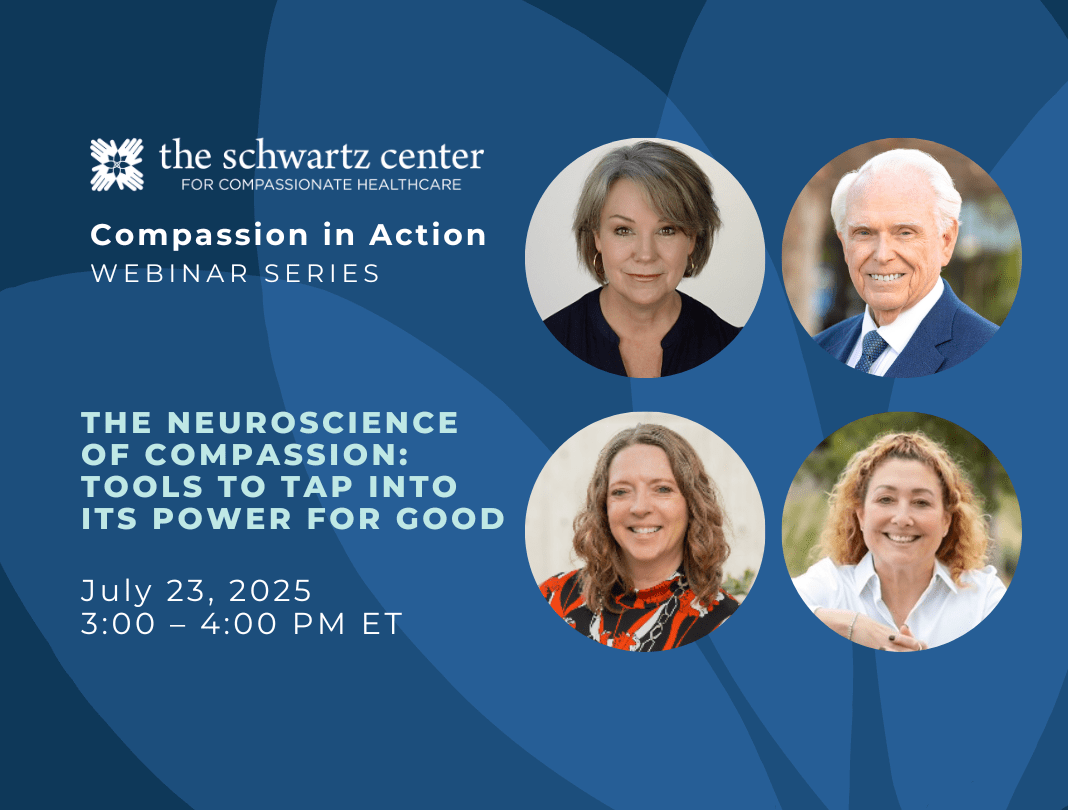
Advances in brain imaging and the neurosciences allow previously unimaginable insights into the workings of the human mind, but not necessarily how to translate that knowledge into a benefit for patients or providers. This is the root of the T. Denny Sanford Institute for Empathy and Compassion’s research. This webinar featured several Sanford Institute leaders discussing how they leverage the neurobiology of empathy and compassion to create initiatives that are game-changing for medical education and patient care.
The featured experts were:
Dr. Mobley presented evidence showing distinct brain networks for empathy and compassion that function by:
Research suggests compassion activates reward pathways, making it its own reward. This enables healthcare workers to feel motivated to help, rather than share their patients’ distress.
Landmark research by Tania Singer demonstrated that empathy and compassion can be enhanced through targeted training. The study showed that empathy training alone can increase negative feelings and emotional overwhelm, while compassion training reduces discomfort and promotes positive feelings toward suffering individuals.
Dr. Kaplan-Liss and Val Lantz-Gefroh developed a unique 60-hour fellowship program that pairs healthcare professionals with artists and journalists. The curriculum utilizes theater, storytelling, and metaphor. Their train-the-trainer model creates sustainable ripple effects, highlighted in recently published research in Academic Medicine that showed enhanced empathic listening and reduced burnout among participants. The programs utilize transformative learning theory, guiding participants through a 10-step process from initial disorientation through critical self-examination to integration of new perspectives and behaviors. Fellows also reported increased job satisfaction and personal wellness.
Dr. Eyler outlined a comprehensive curriculum addressing the unique challenges facing medical students, including high-stakes testing pressure, the lingering effects of pandemic-related isolation, and information overload.
Programs include:
Students in programs with integrated compassion training showed greater emotional connection, improved patient care approaches, and enhanced peer relationships.
The Institute identified several critical areas for continued investigation:
The Sanford Institute’s work reinforces the Schwartz Center’s belief that compassion is a learnable skill rather than a fixed trait. Their work demonstrates clear neurobiological foundations for empathy, enabling the translation of neuroscience into practical training programs that enhance both healthcare worker well-being and patient care.
More Issue Briefs & Research
February 2, 2026
National Schwartz Rounds on Substance Disorders
Despite our scientific understanding of addiction as a chronic disease whose sufferers are prone to relapses, many health professionals and the public still believe that addiction is a choice or a moral failing. Furthermore, common everyday language and slang stigmatizes individuals with SUD and creates cognitive bias towards punitive judgment rather than compassion.
The Impact of Healthcare Cost Controls on the Patient-Caregiver Relationship
At the Schwartz Center for Compassionate Healthcare’s recent New York Thought Leadership Breakfast, in partnership with NewYorkBIO and held at the New York Genome Center, a panel of experts representing diverse perspectives came together to discuss the impact of healthcare cost containment on the patient-caregiver relationship, with a specific focus on so-called “step therapies” to contain prescription drug costs
Building Compassion into the Bottom Line
Compassion is not a panacea for what ails the U.S. healthcare system, but it can be the foundation for improving patients’ care experiences, patient and caregiver satisfaction, and a hospital’s bottom line.
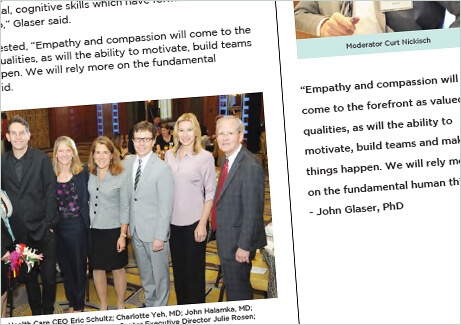
Technology and the Patient-Caregiver Relationship: Another Look
At a recent panel discussion in Boston, four thought leaders who work at the intersection of medicine and technology discussed how new healthcare technologies are affecting the patient-caregiver relationship.
Recommendations from a Conference on Advancing Compassionate, Person- and Family-Centered Care
Compassion is essential for effective collaboration among healthcare professionals, staff, patients and families. But despite evidence supporting the importance of compassionate healthcare, the concepts and skills related to empathy and compassion, and that are needed to provide person-/family-centered and relationship-based care, are not routinely taught, modeled and assessed across the continuum of learning and practice.
Advancing Compassionate, Patient-and Family-Centered-Care through Interprofessional Education for Collaborative Practice
In our increasingly complex healthcare environments, collaboration is essential if we are to progress toward the “Triple Aim” of creating positive patient and family experiences and better health at lower cost.
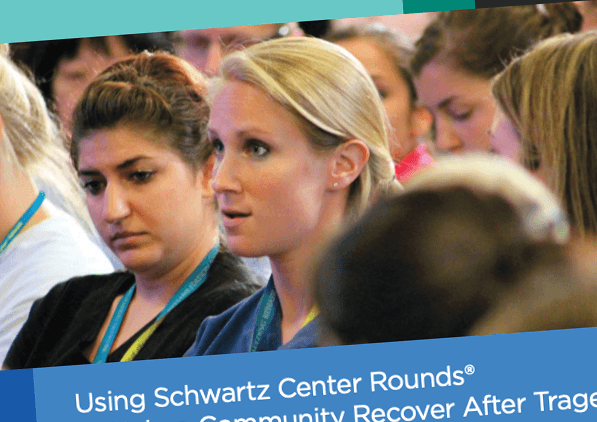
Using Schwartz Center Rounds to Help a Community Recover After Tragedy
Between October 2013 and April 2014, the Schwartz Center for Compassionate Healthcare and the Conference of Boston Teaching Hospitals (COBTH) held eight special Schwartz Center Rounds® sessions for hospital staff , first responders and medical volunteers who treated those injured in the 2013 Boston Marathon bombings.
Seven Guiding Commitments: Making the U.S. Healthcare System More Compassionate
Despite the current focus on patient centeredness, healthcare professionals face numerous challenges that impede their ability to provide compassionate care that ameliorates concerns, distress, or suffering.
© 2026 The Schwartz Center. All Rights Reserved.
